

OTTER "Trapper" Stag


€170.00
Available, delivery time: 2-5 days
Product information "OTTER "Trapper" Stag"
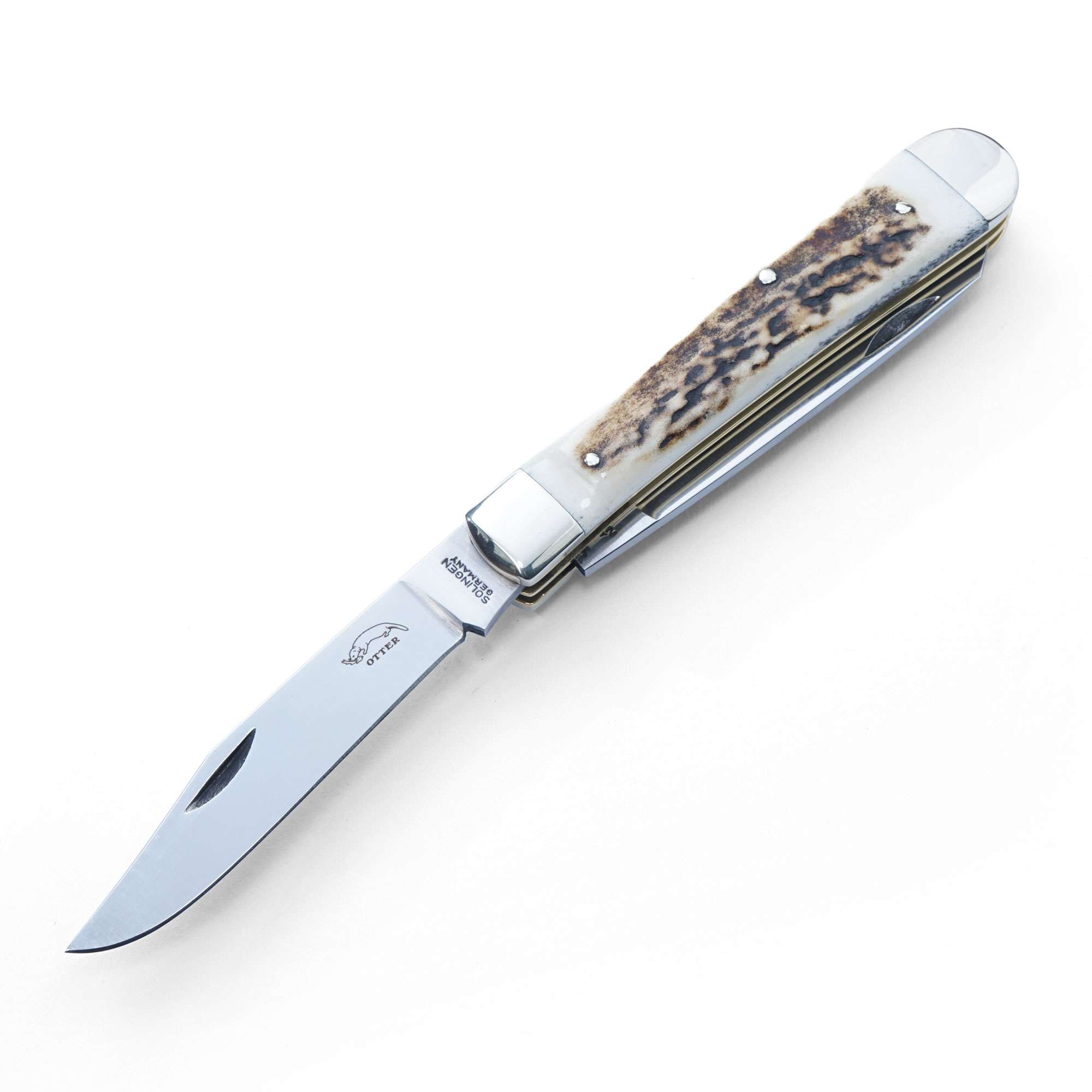
Trapper Knife – Between Myth and Craftsmanship
The History of the Trapper Knife
The term “Trapper knife” originates from the world of 19th-century North American fur trappers—men who lived in the wilderness and relied on dependable tools. However, the knife as we know it today was developed much later.
The classic Trapper knife pattern was introduced in the 1920s in the United States, when manufacturers began standardising proven pocket knife designs for hunting, outdoor use, and everyday tasks. The historic name “Trapper” was deliberately retained, linking the knife to the rugged frontier era of North America.
Functional Two-Blade Design
The Trapper knife is a traditional slipjoint pocket knife with a non-locking blade held in place by a spring mechanism, known for its simple and reliable construction.
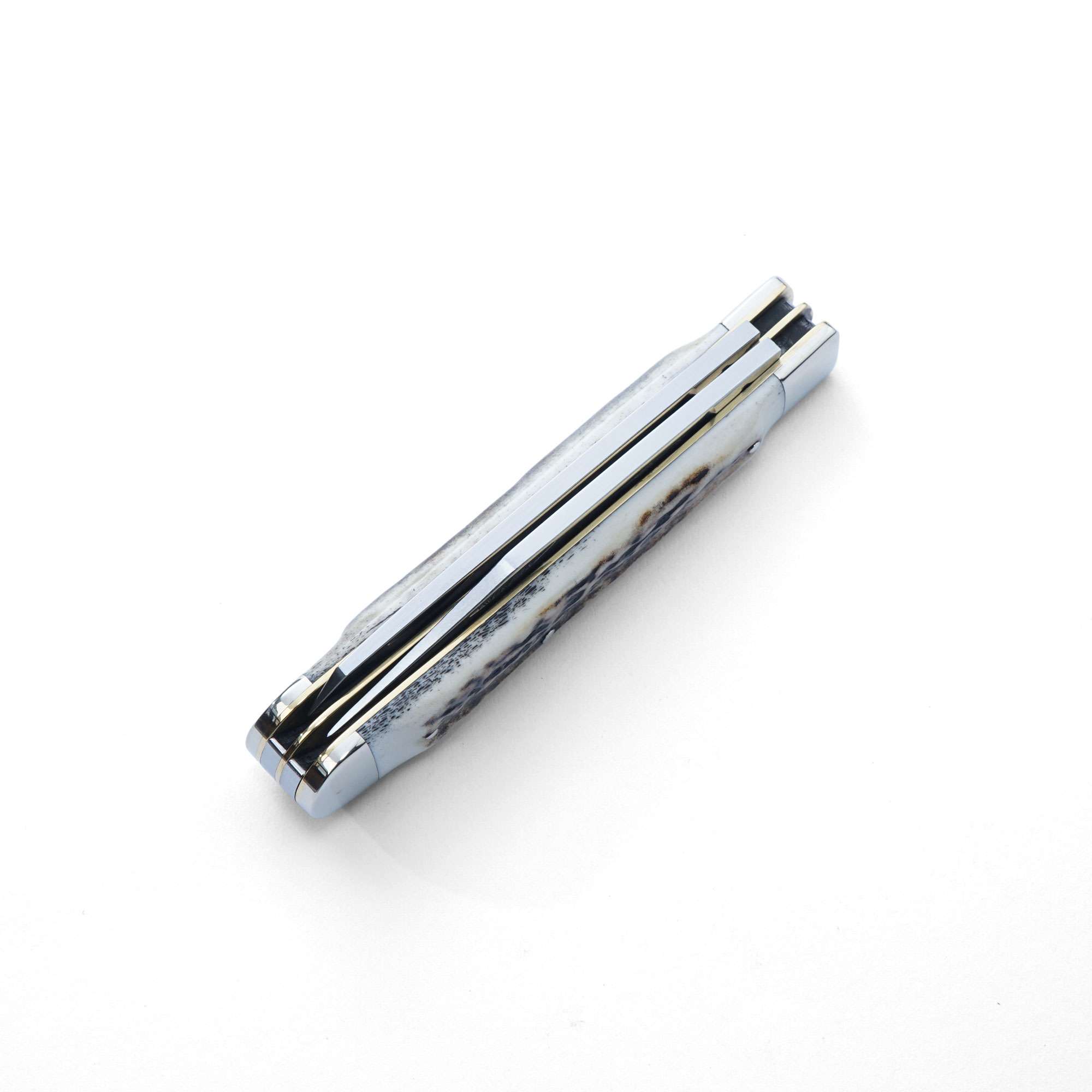
It typically features two distinct blades:
- Clip-point blade: A versatile all-rounder designed for precise cutting tasks in daily use and outdoor applications.
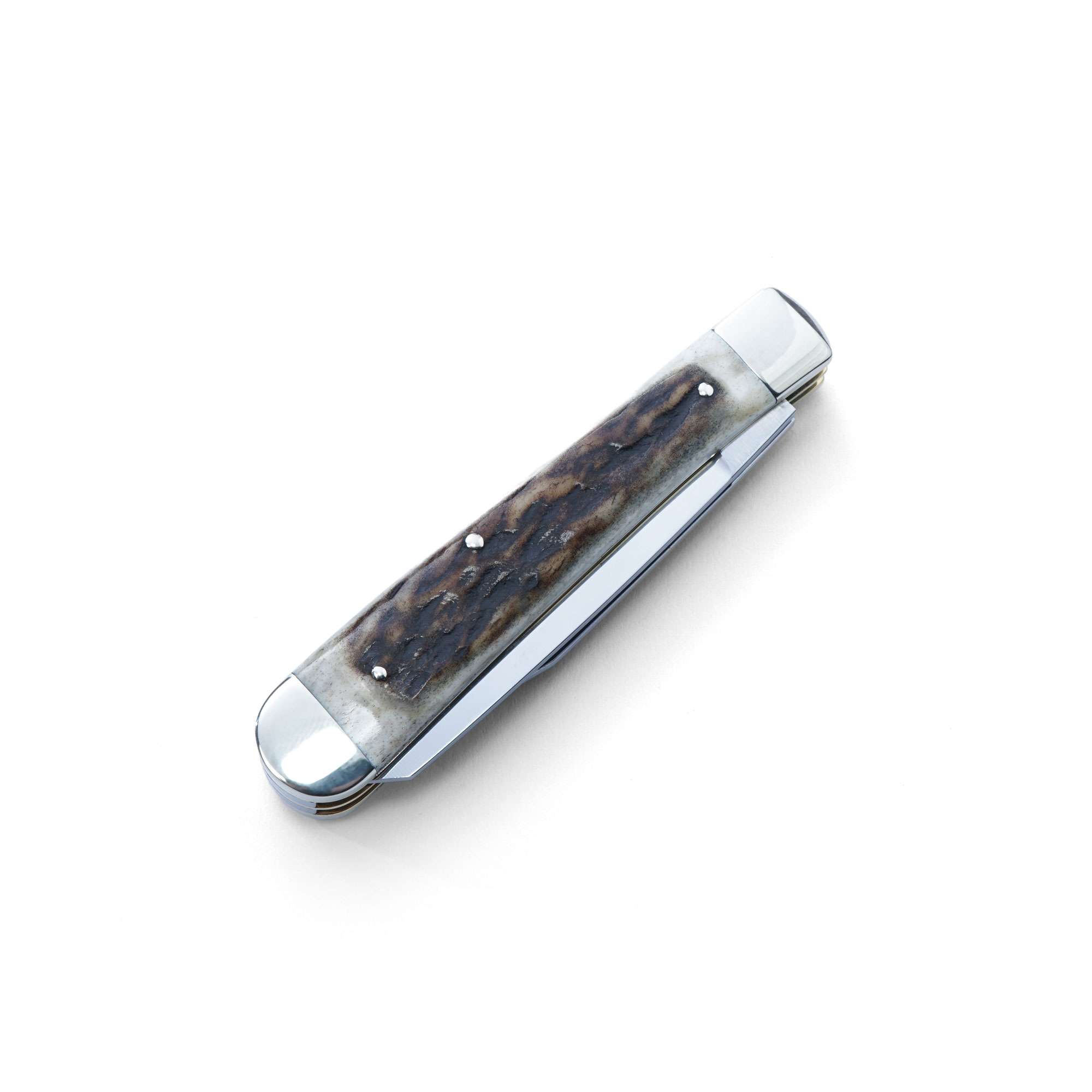
- Spey blade: With its more rounded, blunter tip, historically developed for skinning and dressing game while minimising the risk of damaging internal organs.
This dual-blade configuration still makes the Trapper knife a highly practical companion for hunting, outdoor life and everyday carry.
Materials with Character
The blades are made from C75 high-carbon steel, representing traditional tool-making philosophy. They sharpen exceptionally well and develop a unique patina over time.
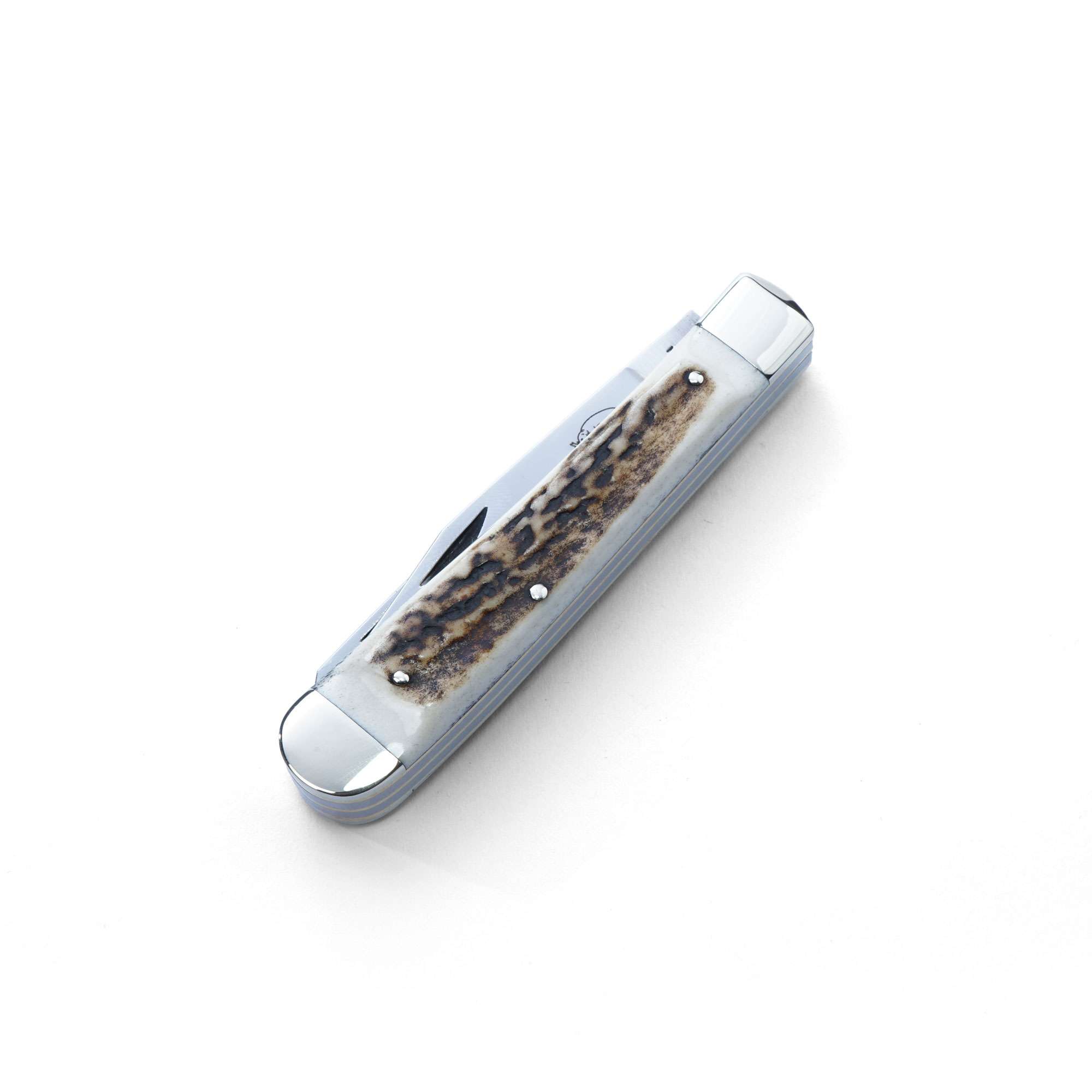
The handle is crafted from genuine stag, ensuring that each Trapper knife is truly unique. It is complemented by classic nickel silver bolsters and a brass liner, both characteristic materials of traditional pocket knife craftsmanship.
| Accessories: | Spey blade |
|---|---|
| Blade thickness: | 3,0 mm |
| Handle length: | 103 mm |
| Material Bolster: | Nickel silver |
| Material Erl/Liner: | Brass |
| Total length: | 183 mm |
| Weight: | 105 g |
| Blade length: | 80 mm |
| Blade material: | Carbon steel C75 |
| Handle material: | Buckhorn |
| Lock: | Slipjoint |
The pocket knives and fixed blade knives offered by OTTER-Messer are tools that must be used carefully and properly. Please observe the following safety instructions to minimize risks and ensure safe use.
2. Important Notes on Safe Use- Cutting Tool, Not a Toy: Pocket knives and fixed blade knives are not toys. They must not be accessible to children or unauthorized persons.
- Sharp Blades: The knives are sharp and can cause injuries if handled improperly.
- Always keep fingers away from the cutting area.
- Store knives in suitable sheaths or cases.
- No Use for Inappropriate Purposes: Use knives only for their intended purpose (e.g., cutting materials). Avoid prying, throwing, or other improper applications.
- Safe Transport: Ensure that knives are stored safely during transport so that neither you nor others are endangered.
- Knives should always be kept out of the reach of children.
- Store knives in a dry and secure place to prevent rust and unauthorized access.
- Clean knives after use with a damp cloth and dry them thoroughly.
- Regularly sharpen the blade with appropriate tools to maintain functionality.
- Avoid contact with aggressive chemicals that could damage the blade or handle.
- Risk of Injury: Improper use can lead to serious cuts.
- Misuse May Have Legal Consequences: The improper use of knives can have legal implications in some countries. Adhere to applicable regulations and carry knives only where permitted.
- Caution with Self-Opening Knives: Knives with automatic or spring-assisted mechanisms must be handled with extra care to prevent unwanted opening.
The manufacturer and seller accept no liability for damages resulting from improper use or disregard of safety instructions.