

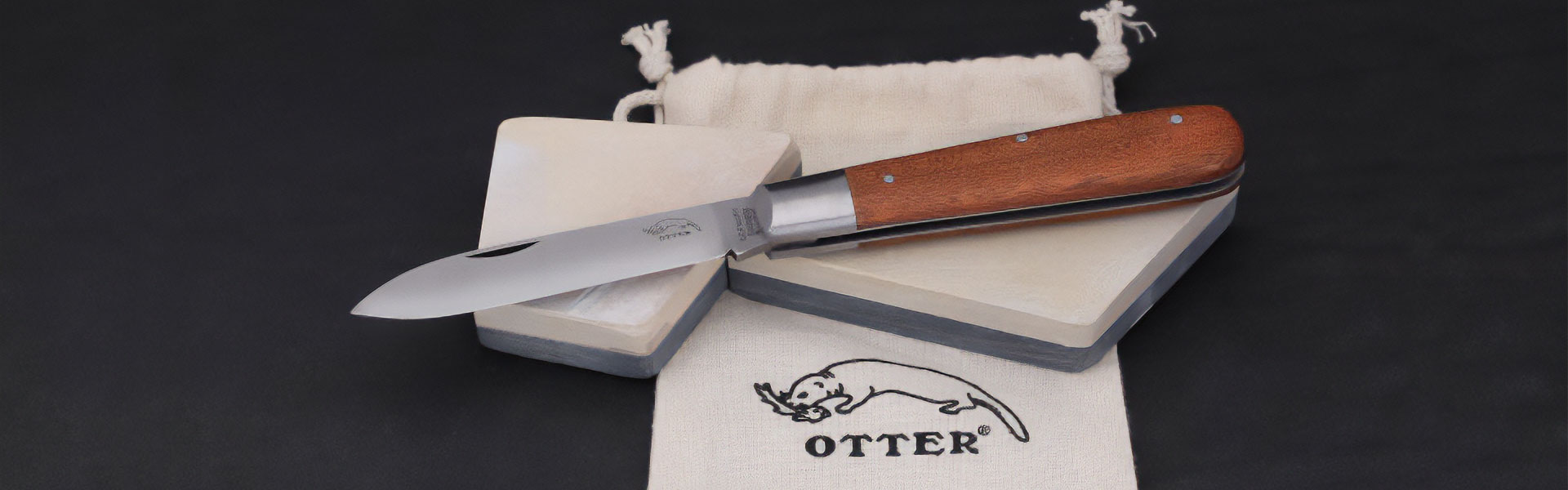
How to Sharpen a Pocket Knife Correctly: A Step-by-Step Guide
The Blade: The Heart of Every Pocket Knife
The blade is the heart of any knife. To ensure your pocket knife cuts reliably during everyday tasks—and potentially serves as a life-saving tool during outdoor adventures—the blade must remain sharp, rust-free, and undamaged. Achieving this requires regular maintenance and proper resharpening.
In this guide, the knife experts at OTTER-Messer explain how to maintain and sharpen your pocket knife at home for peak performance.
Complete Pocket Knife Care & Maintenance
Folding knives are reliable companions and versatile all-around tools for outdoor use and home tasks. However, to function flawlessly in every situation, your tool needs consistent care. Sharpening is only one part of the equation—much like servicing a car, routine checkups keep your folding knife performing at its best.
Essential Knife Maintenance Checklist:
- Inspect: Check the blade, handle, and sheath for damage or play.
- Clean: Wash and dry the blade, handle, and sheath thoroughly.
- Protect: Apply a thin layer of Ballistol or high-grade gun oil to high-carbon steel blades to prevent rust.
- Test: Check the blade’s sharpness regularly on paper.
- Sharpen: Resharpen the edge whenever you feel resistance while cutting.


How to Sharpen Your Pocket Knife Step-by-Step
With the right technique and a bit of practice, you can easily restore your blade to a razor-sharp edge.
Tools and Materials Needed:
- Sharpening stone (Whetstone, diamond stone, or oilstone)
- Lapping liquid/oil (Ballistol, honing oil, or water/soap depending on the stone)
- Honing steel (Sharpening rod)
- Sheet of paper (for sharpness testing)
Step 1: Prepare Your Sharpening Stone
Various whetstones and sharpening stones are available on the market. Whether you use a diamond plate, a traditional Japanese water stone, or a Belgian Coticule, ensure it measures at least 5 x 12 cm (2 x 5 inches) for smooth, controlled strokes.
To prevent metal filings from clogging the pores of your stone, prepare it according to its type:
- Diamond Stones: Coat the surface with a small amount of diluted liquid hand soap.
- Waterstones: Soak or splash thoroughly with water.
- Belgian Coticule: Can be used with water or oil. (Note: Once you use oil on a stone, you must strictly stick to oil, as oil-clogged pores will no longer absorb water).
- Other Bench Stones: Apply a thin layer of honing oil or light machine oil.
Step 2: Set the Correct Sharpening Angle
Before sharpening, examine your knife's factory bevel. The optimal sharpening angle for most pocket knives is 15° to 20° per side.
Place the blade against the flat surface of the stone at this precise angle, with the cutting edge facing away from you.
Caution:Holding the knife at an incorrect or overly steep angle can scratch the blade face or dull the edge rather than sharpening it.
Step 3: Sharpen the First Side
Using light, even pressure, sweep the blade across the stone in a smooth motion from heel to tip. Typically, about 12 passes are sufficient to raise a sharp edge on the first side. The more often you practice, the easier this fluid motion becomes.
Step 4: Sharpen the Second Side & Test Sharpness
Flip the pocket knife over and repeat the process on the opposite side. Draw the blade across the stone 6 to 8 times, maintaining the exact same 15° to 20° angle.
- The Paper Test: Hold a single sheet of paper freely in the air and slice downward. If the blade glides cleanly through without tearing or snagging, your knife is sharp.
Step 5: Deburr and Polish with a Honing Steel
To finish, give your blade a razor-sharp polish. Hold a honing steel vertically and slide the blade downward along the rod at a slightly wider angle than your sharpening angle.
This process aligns and removes the burr—microscopic metal wire edges created during grinding. Your pocket knife is now fully sharp and ready for action.
Quick Tips & Field Hacks
Quick Touch-Up Tip
If you are short on time and only need a quick touch-up, using the honing steel on its own is an excellent, fast alternative to a full multi-step sharpening session.
Field Hack: No Sharpening Stone Available?
If you are camping, hunting, or traveling outdoors without a stone or rod, you can still touch up a dull edge. Find a flat stone or the unglazed edge of a concrete step/brick. Draw the cutting edge across the hard edge at a flat angle to realign the blade in an emergency.
Electric Sharpeners and Hybrid Knife Sharpeners
If manual sharpening feels too time-consuming, electric knife sharpeners save effort by grinding the edge in automated stages:
- Coarse Stage: Uses coarse grinding wheels to reshape a dull edge.
- Fine Stage: Uses diamond or ceramic wheels to fine-tune and polish the edge.
Hybrid knife sharpeners are also available, combining electric grinding wheels with manual honing slots. Always choose a model with guide slots that match your pocket knife’s specific edge bevel!
Our Services & Experience
Custom Laser Engraving
Make your knife truly unique. Upon request, we can personalize your pocket knife with custom laser engraving—whether it's your name, initials, a date, or a custom logo. Perfect for personalized gifts, outdoorsmen, and collectors.
Professional Knife Sharpening Service
Restore your blade to factory-sharp performance. Our experienced cutlers expertly hand-sharpen and recondition your knives using traditional craftsmanship.
We sharpen all brands: Our professional knife sharpening service is available not only for OTTER knives, but for knives from all other manufacturers and brands as well.
Custom Pocket Knife Workshops
Want to create a one-of-a-kind pocket knife with your own hands? Join our hands-on knife-making workshop and build your custom pocket knife from scratch under professional guidance.
Spaces are limited—sign up for the next workshop today!