
Anchor knife "Burl Robinia"
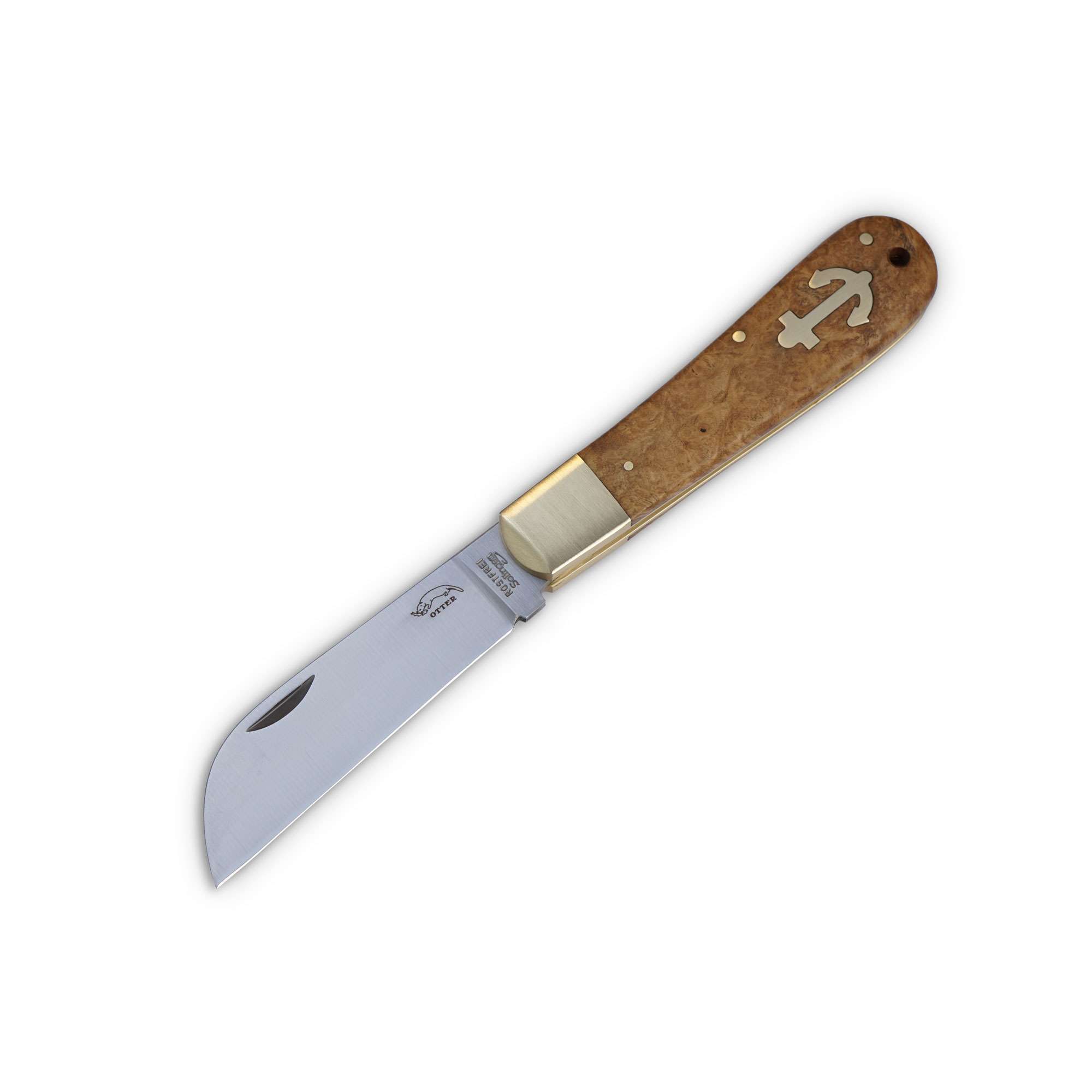
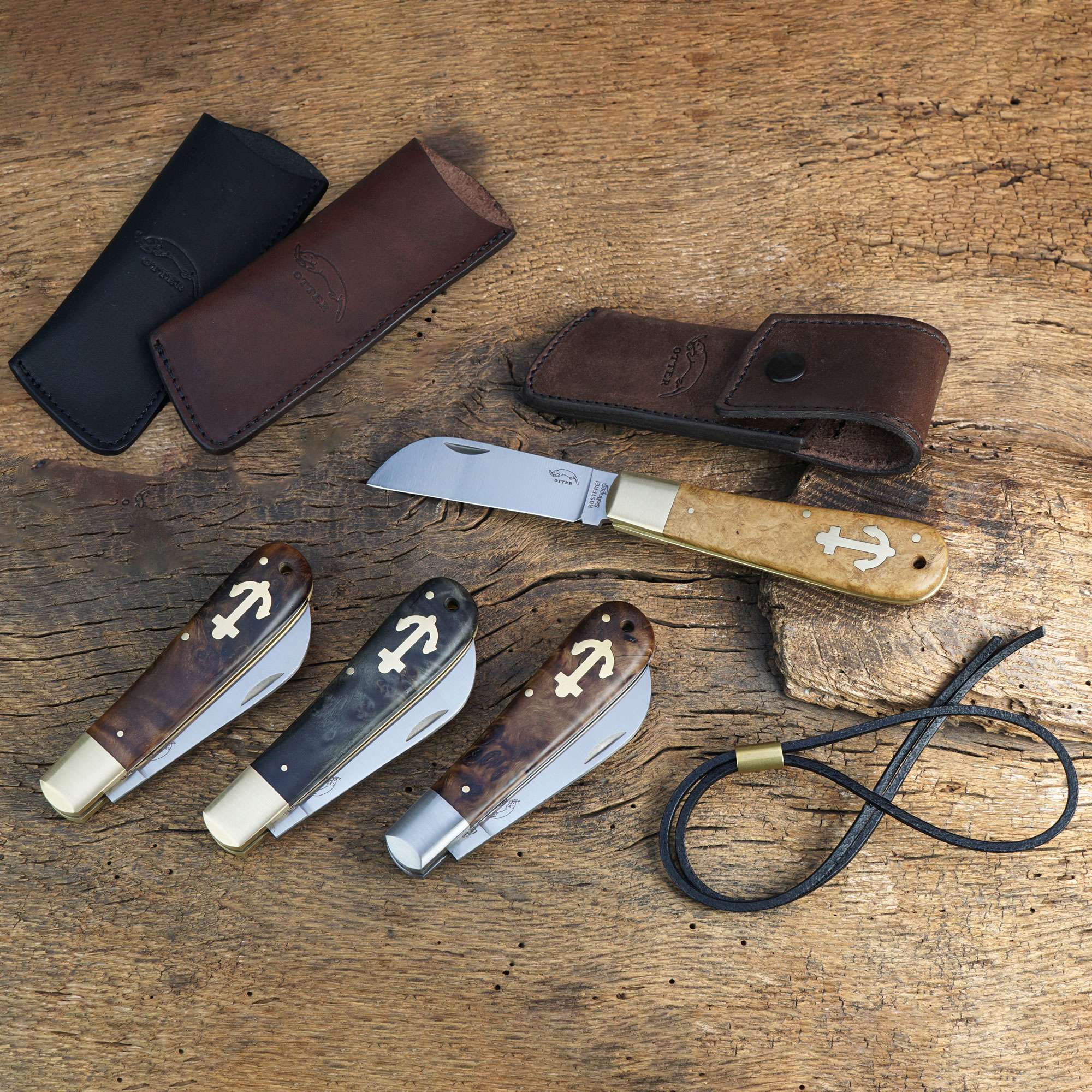
The Traditional Anchor Knife – Burl RobiniaA classic reinterpreted.The Anchor Knife is more than just a tool – it is a piece of cultural heritage. Originally designed as a working knife for seafarers, this version stands out with its handle made of burl robinia (black locust). Robinia is renowned for its extreme hardness and durability. The vivid, wild grain of the wood makes every single knife a unique masterpiece.Design Highlights: The brass anchor inlaid into the wood harmonizes perfectly with the matching matte brass bolsters.Blade Choice: Available with an easy-care stainless steel blade for everyday use or a traditional carbon steel blade, which delights connoisseurs with its extreme sharpness and natural patina.Functionality: The characteristic sheepfoot blade was specifically developed for maritime tasks. With its straight edge, it is perfectly suited for powerful pull cuts and offers enhanced safety on choppy waters due to its blunt spine. Matching Accessories & Recommendations Perfectly matched: as a complement, we recommend our sturdy knife holster: Knife holster 02 Dark brown Black Manufacturer information: OTTER-Messer GmbH • Schwertstraße 35 • 42651 Solingen, Germany Web: www.otter-messer.de • E-Mail: info@otter-messer.de • Phone: +49 212 337829
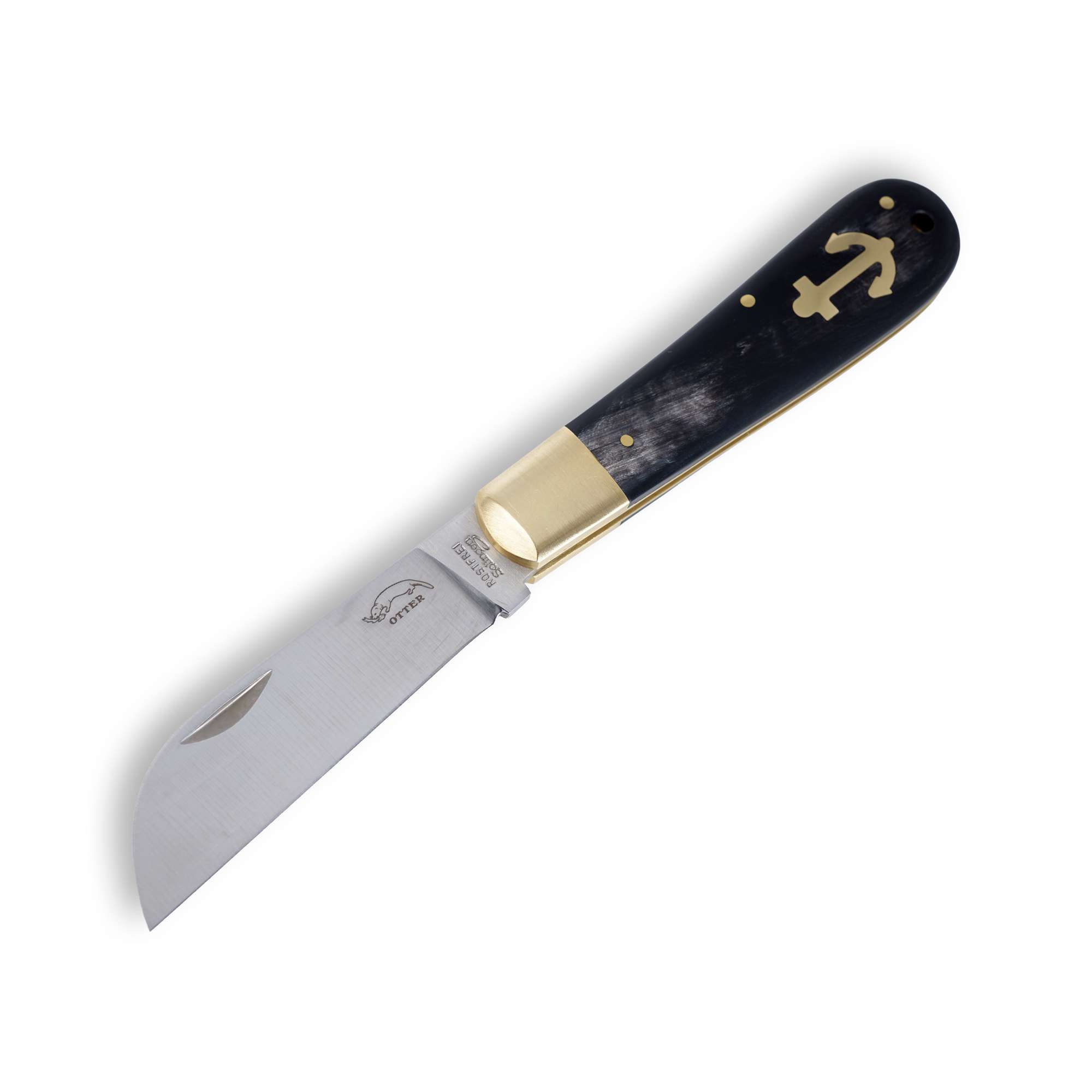
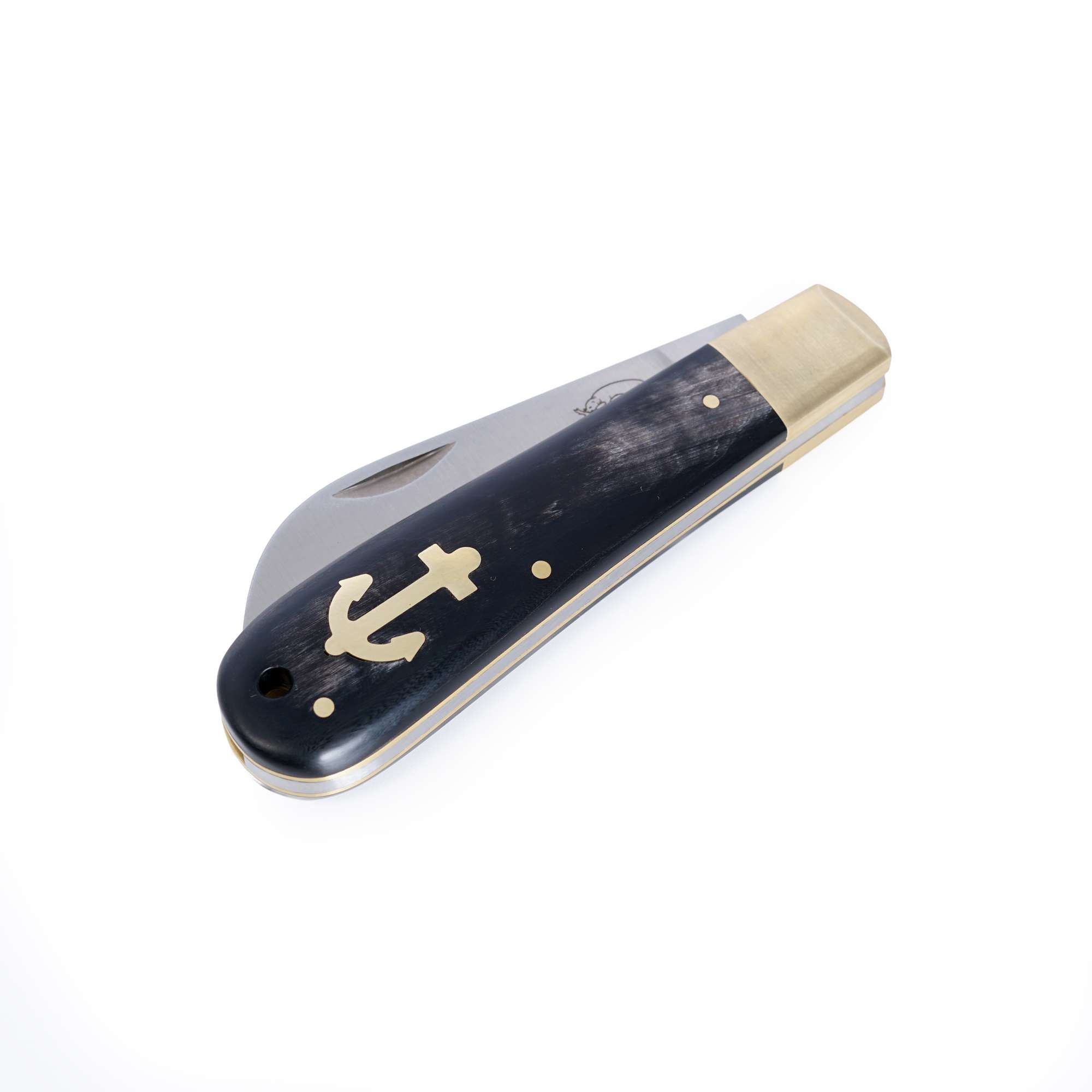
Anchor knife "Marbled horn"
The anchor knife is not only a functional tool, but also a real piece of art. The marbled horn scales offer breathtaking contrasts and unique patterns - each handle is one of a kind. The brass bolsters and the brass anchor embedded in the handle lend the knife a maritime elegance reminiscent of seafaring tradition. History: The anchor knife was originally developed by sailors as a reliable tool for everyday use at sea. Today, the anchor, a symbol of hope, adorns the handles and is a reminder of the robust tradition of the craft. Material: Unique coloured horn scales with fascinating patterns Design: Brass cheeks and a brass anchor embedded in the handle - perfect for collectors and lovers of maritime craftsmanship Exclusivity: Each handle scales is unique, the knife is a real collector's item Matching Accessories & Recommendations Perfectly matched: as a complement, we recommend our sturdy knife holster: Knife holster 02 Dark brown Black Manufacturer information: OTTER-Messer GmbH • Schwertstraße 35 • 42651 Solingen, Germany Web: www.otter-messer.de • E-Mail: info@otter-messer.de • Phone: +49 212 337829
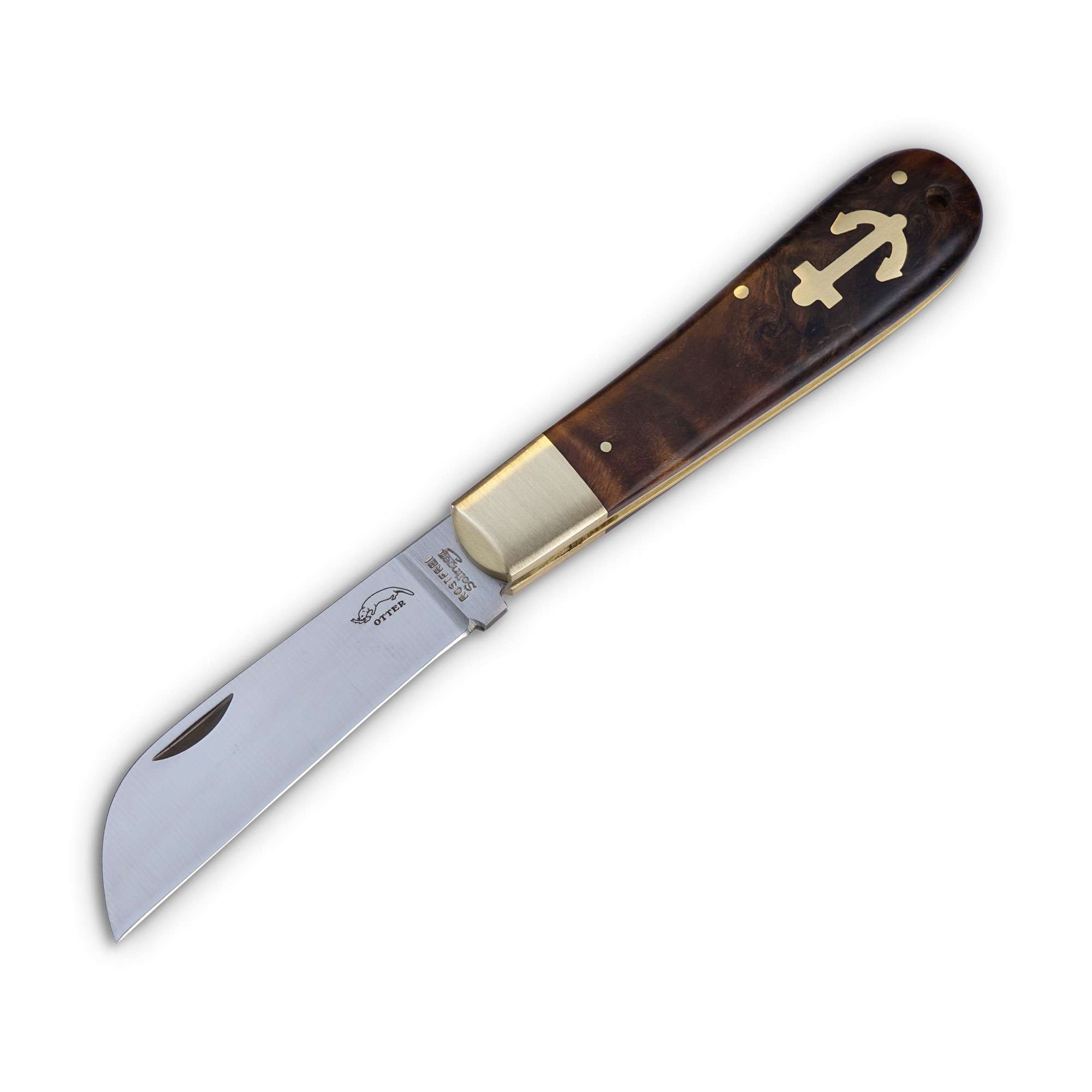
Anchor knife "Walnut Burl"
The Exclusive: Anchor Knife – Walnut BurlPure nature in its most beautiful form.Burl wood has always been considered the finest part of the tree. These exclusive handle scales carry a unique story: they are crafted from the same premium walnut burl used for high-end gunstocks. The complex, swirling grain structure creates a visual depth that is second to none. Unlike stabilised woods, this walnut remains completely natural to preserve its original character and authentic feel.Touch & Quality: The combination of vibrant wood, hand-fitted brass bolsters, and the precise blade action makes every use a tactile pleasure.Blade: Choose the carbon steel version for maximum edge retention or the stainless steel option for easy maintenance during picnics or on the boat.Unique Guarantee: Since no two pieces of burl are alike, your knife is as individual as a fingerprint. A true piece of nature that develops its own unique story through use. Matching Accessories & Recommendations Perfectly matched: as a complement, we recommend our sturdy knife holster: Knife holster 02 Dark brown Black Manufacturer information: OTTER-Messer GmbH • Schwertstraße 35 • 42651 Solingen, Germany Web: www.otter-messer.de • E-Mail: info@otter-messer.de • Phone: +49 212 337829
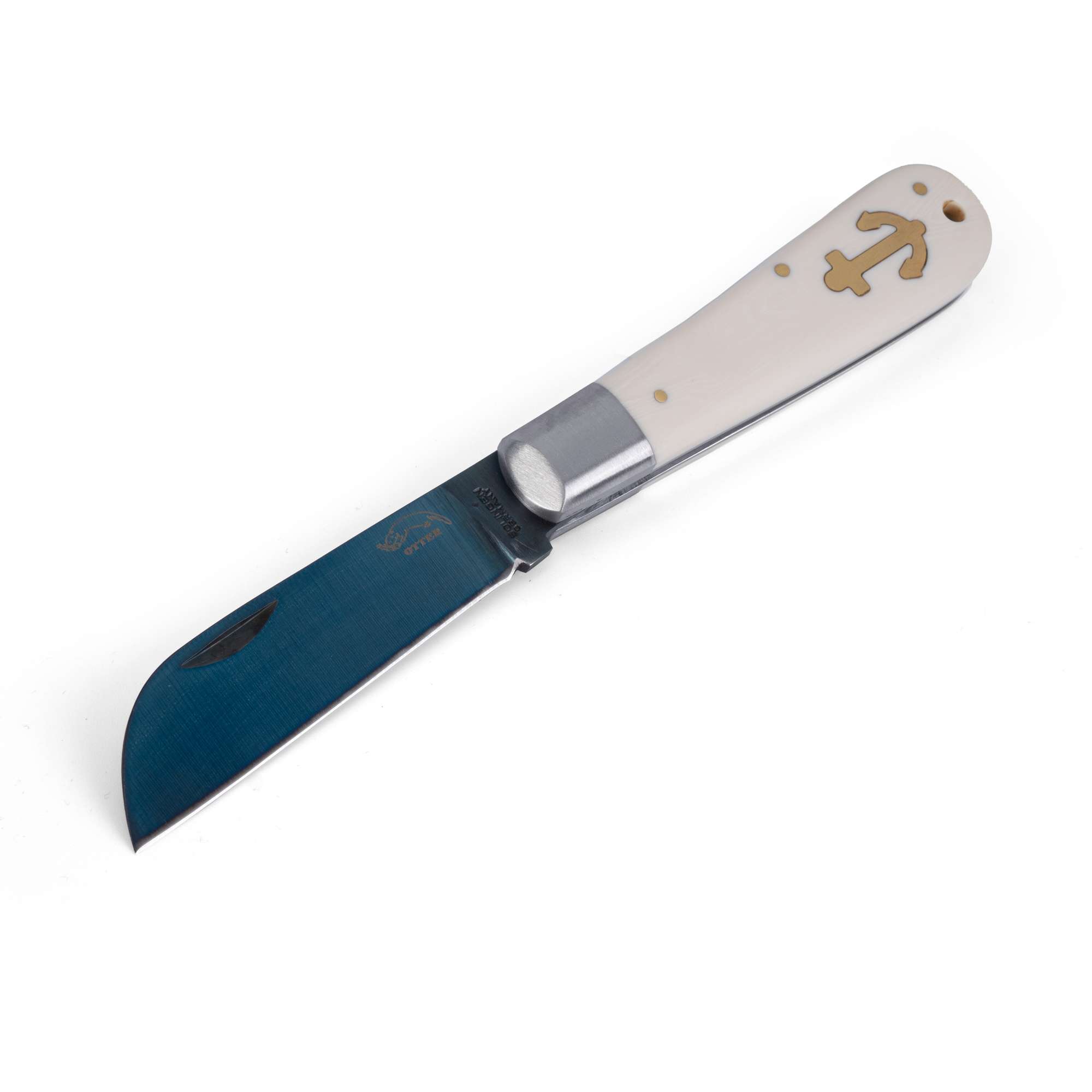
Anchor knife Elforyn*
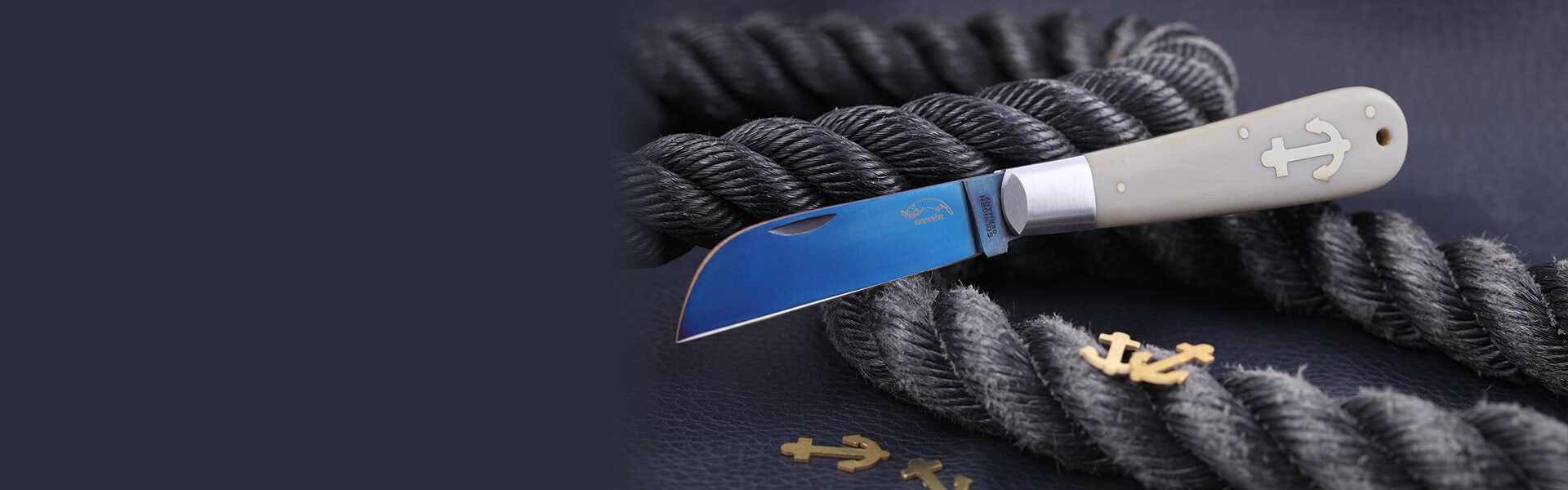
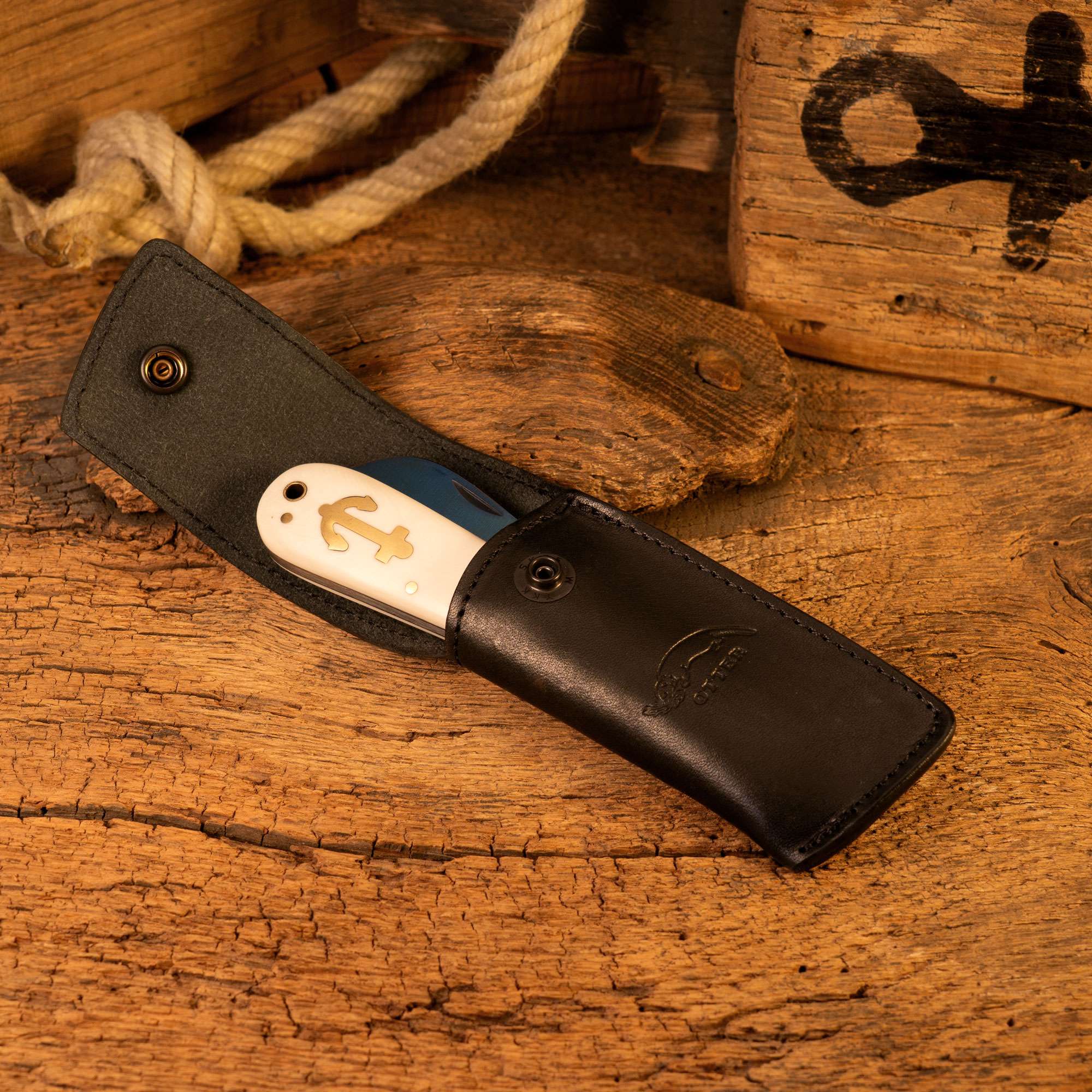
Functionality and understated beauty — these attributes define this classic from the house of OTTER. The anchor knife is a true eye-catcher. The brass anchor embedded in the Elforyn* handle and the blued carbon steel blade give this knife a unique flair. At the end of the handle, there is a hole for the attachment of a lanyard. The hoof blade is particularly well-suited for drawing cuts. The surface bluing may diminish with use! * Elforyn is an environmentally friendly alternative to real ivory. It is made from resins, some of which are of plant origin, and other natural fibers and materials. Elforyn is resistant to moisture, cracks, and discoloration. The material boasts a high surface hardness and is extremely abrasion-resistant. Matching Accessories & Recommendations Perfectly matched: as a complement, we recommend our sturdy knife holster: Knife holster 02 Dark brown Black Manufacturer information: OTTER-Messer GmbH • Schwertstraße 35 • 42651 Solingen, Germany Web: www.otter-messer.de • E-Mail: info@otter-messer.de • Phone: +49 212 337829
Anchor knife grenadilla large
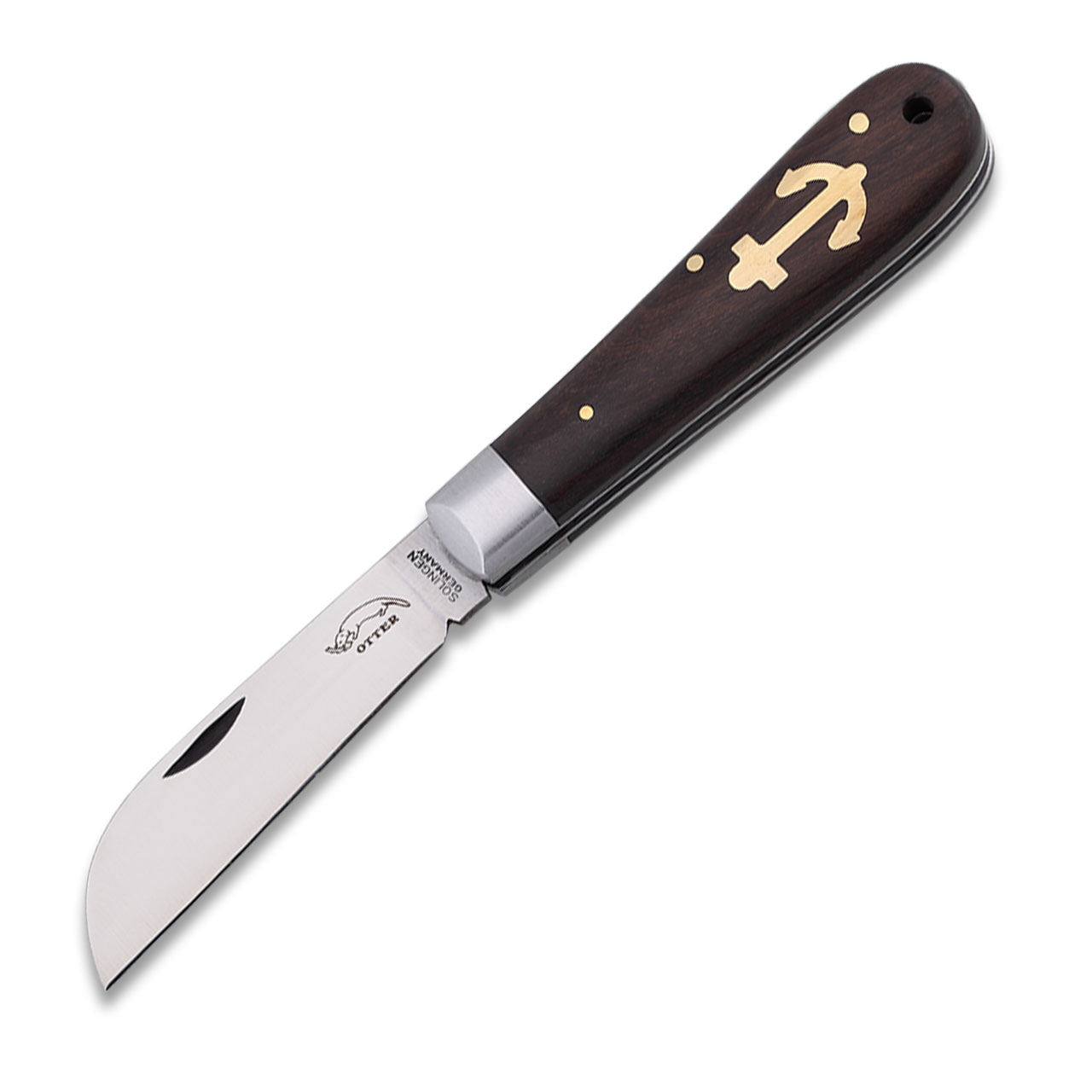
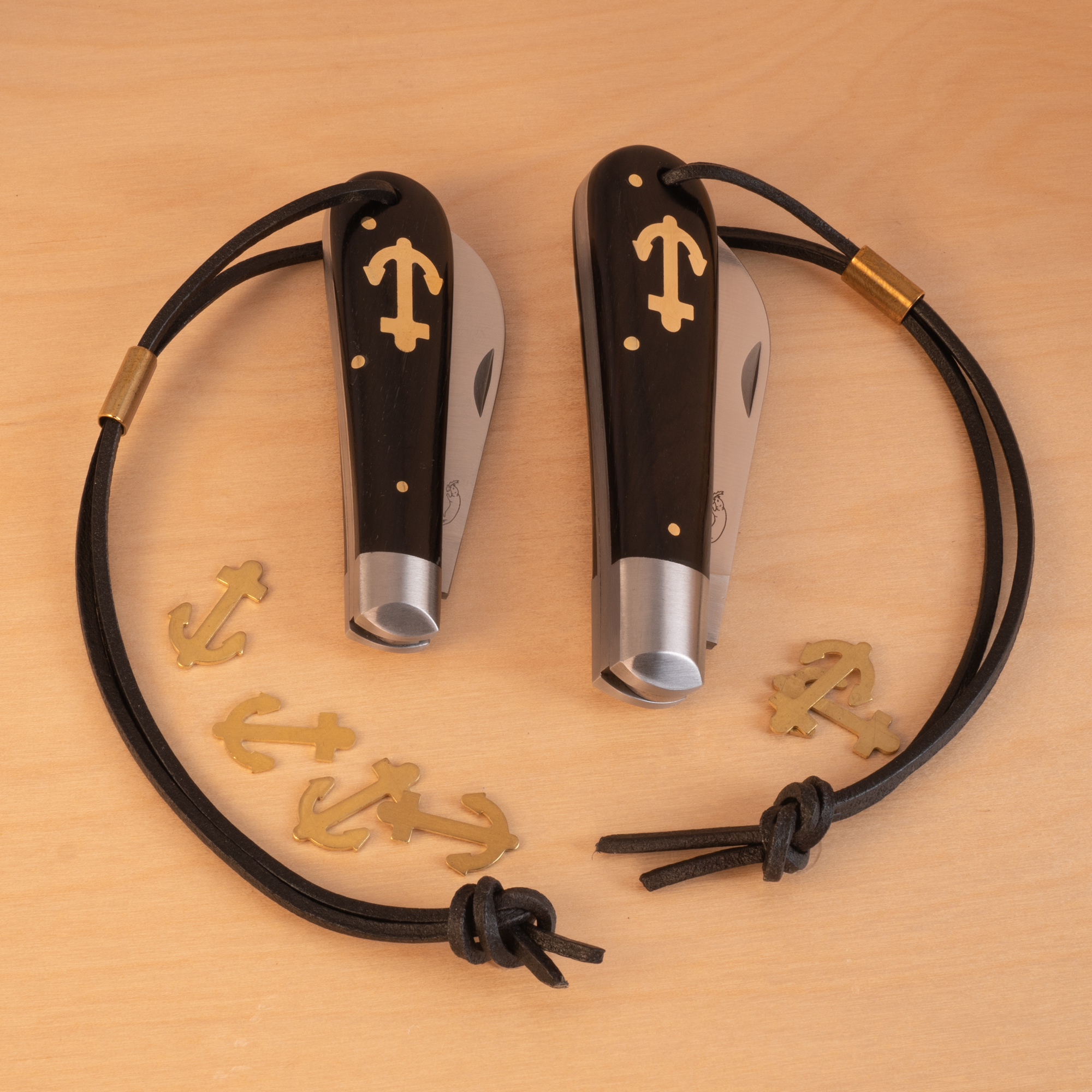
The anchor knife from OTTER combines practical functionality with understated elegance. Its impressive design is complemented by a brass anchor embedded in the elegant wooden handle, creating an appealing contrast with the dark wood scales. The ergonomic handle features a practical hole for a lanyard, making it easier to carry. The specially shaped hoof blade is perfect for slicing cuts. This pocket knife is the large version of our anchor knife. Please note: We sell our knives with grenadilla scales only within Germany and the EU.Our Grenadilla knife sheaths are from the old stock before the listing in the EC Regulation No. 338/97 took place on 02.01.2017. This pocket knife is a large version of the anchor knife. Matching Accessories & Recommendations Perfectly matched: as a complement, we recommend our sturdy knife holster: Knife holster 02 Dark brown Black Manufacturer information: OTTER-Messer GmbH • Schwertstraße 35 • 42651 Solingen, Germany Web: www.otter-messer.de • E-Mail: info@otter-messer.de • Phone: +49 212 337829
Anchor knife grenadilla small
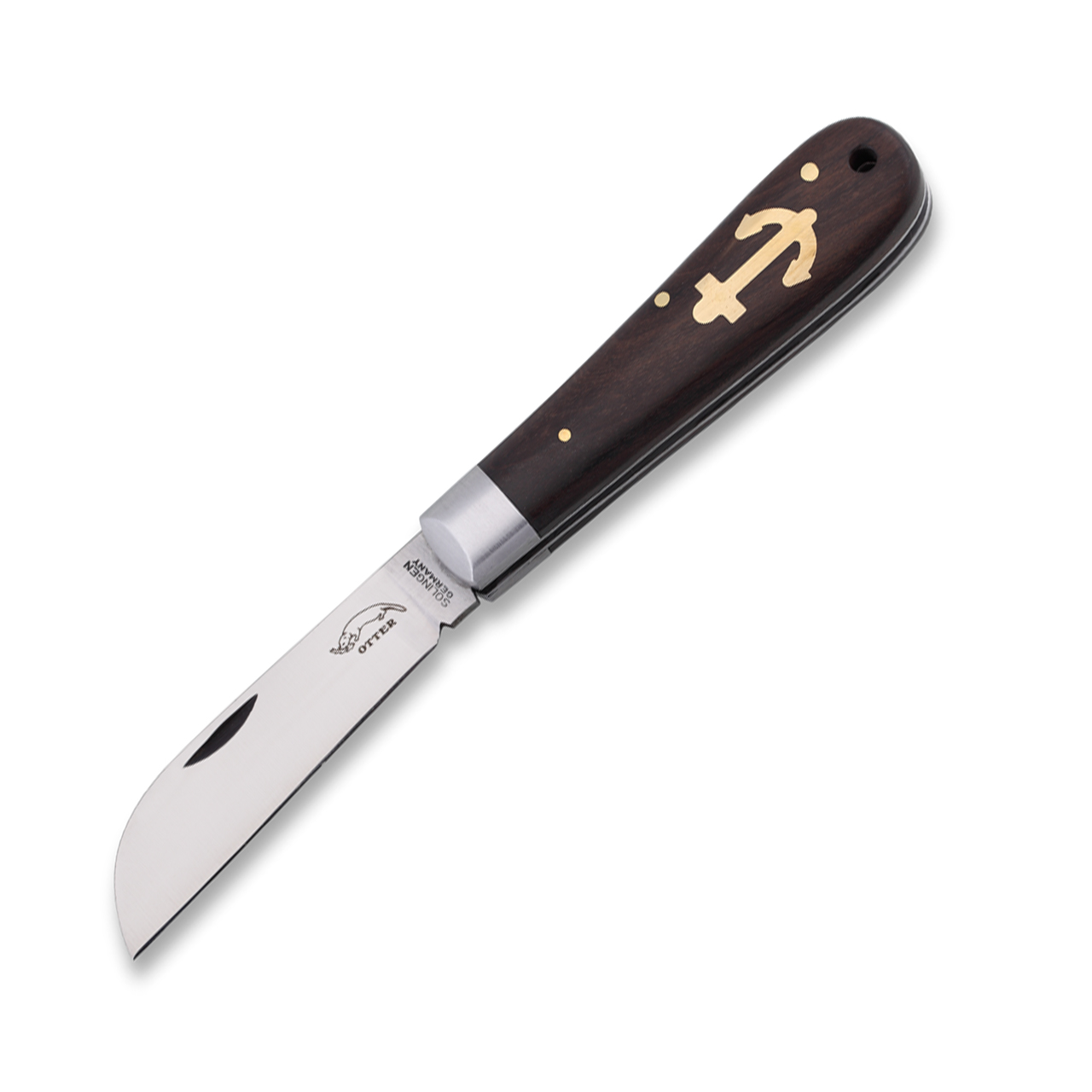
Functionality and understated beauty — these are the attributes that distinguish this classic from the house of OTTER. The anchor knife is a true eye-catcher. The brass anchor embedded in the wooden handle gives the pocket knife a special flair. Together with the elegant Sapeli wood handle scales, it creates a stylish contrast. This pocket knife is the smaller version of our anchor knife. Matching Accessories & Recommendations Perfectly matched: as a complement, we recommend our high-quality leather cases and the sturdy knife holster: Leather case 03 Dark brown Black Knife holster 01 Dark brown Black Manufacturer information: OTTER-Messer GmbH • Schwertstraße 35 • 42651 Solingen, Germany Web: www.otter-messer.de • E-Mail: info@otter-messer.de • Phone: +49 212 337829
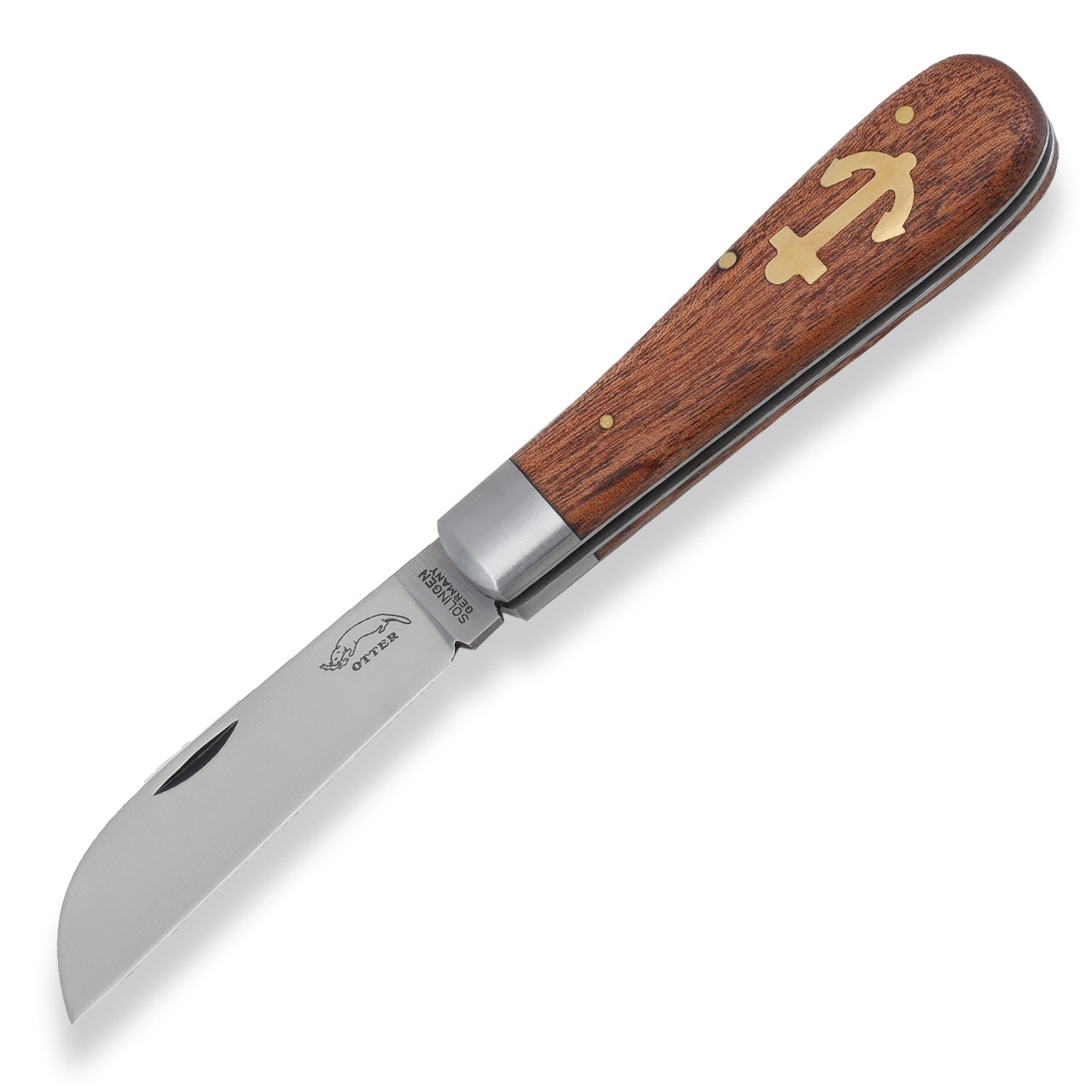
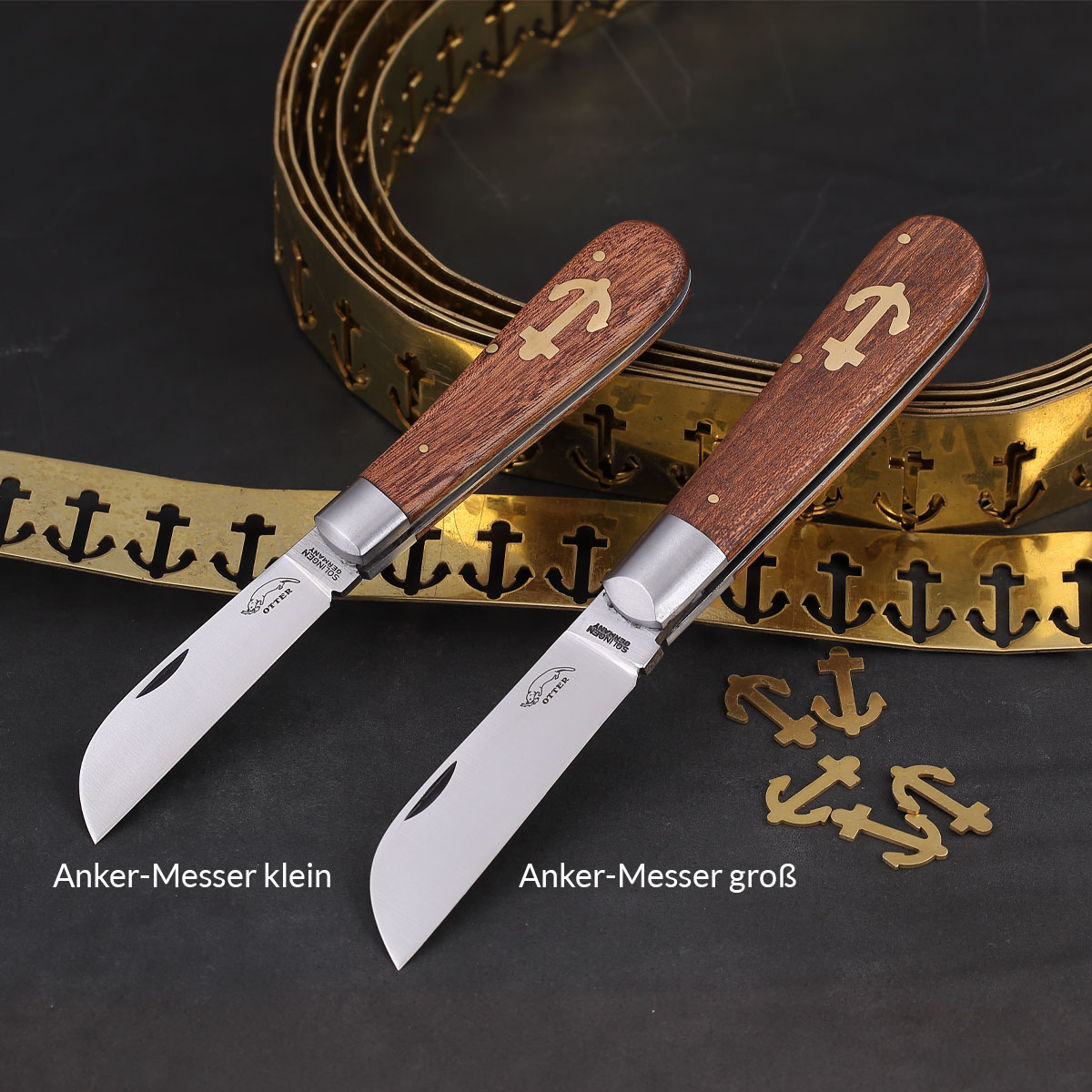
Anchor knife sapele large
Functionality and understated beauty — these are the attributes that distinguish this classic from the house of OTTER. The anchor knife is a true eye-catcher. The brass anchor embedded in the wooden handle gives the pocket knife a special flair. Together with the elegant Sapeli wood handle scales, it creates a stylish contrast. This pocket knife is the large version of our anchor knife. Matching Accessories & Recommendations Perfectly matched: as a complement, we recommend our sturdy knife holster: Knife holster 02 Dark brown Black Manufacturer information: OTTER-Messer GmbH • Schwertstraße 35 • 42651 Solingen, Germany Web: www.otter-messer.de • E-Mail: info@otter-messer.de • Phone: +49 212 337829
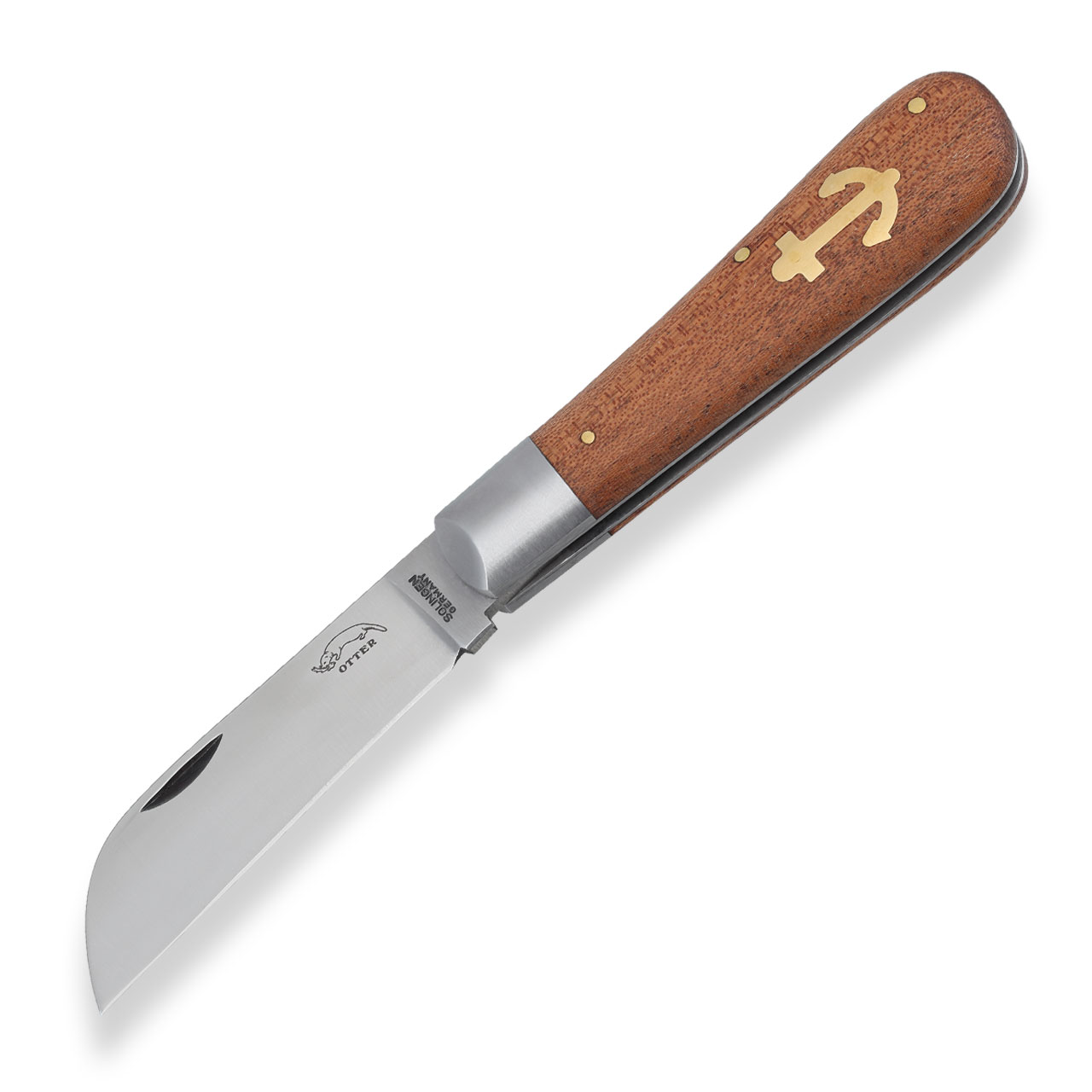
Anchor knife sapele small
Functionality and understated beauty — these are the attributes that distinguish this classic from the house of OTTER. The anchor knife is a true eye-catcher. The brass anchor embedded in the wooden handle gives the pocket knife a special flair. Together with the elegant Sapeli wood handle scales, it creates a stylish contrast. This pocket knife is the smaller version of our anchor knife. Matching Accessories & Recommendations Perfectly matched: as a complement, we recommend our high-quality leather cases and the sturdy knife holster: Leather case 03 Dark brown Black Knife holster 01 Dark brown Black Manufacturer information: OTTER-Messer GmbH • Schwertstraße 35 • 42651 Solingen, Germany Web: www.otter-messer.de • E-Mail: info@otter-messer.de • Phone: +49 212 337829
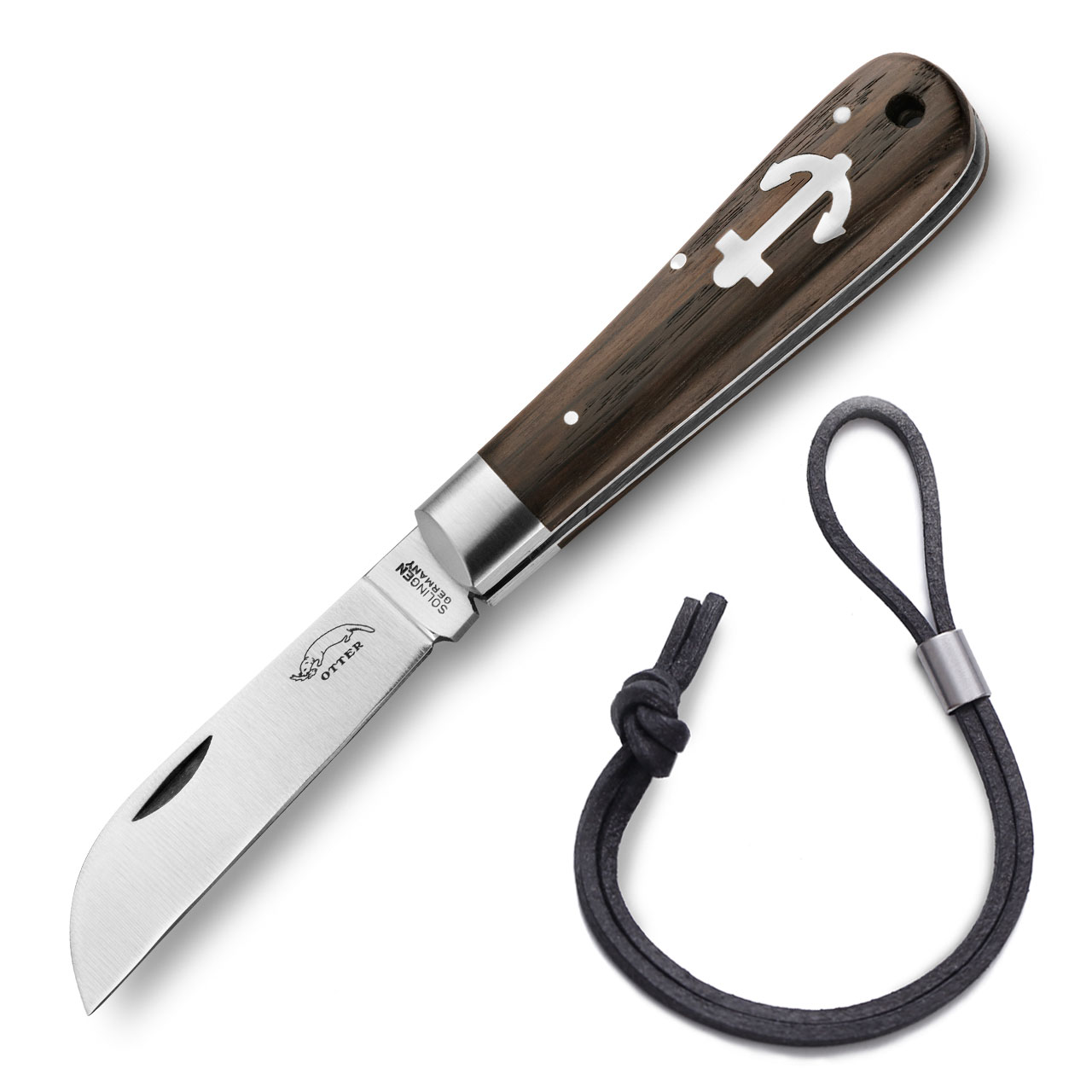
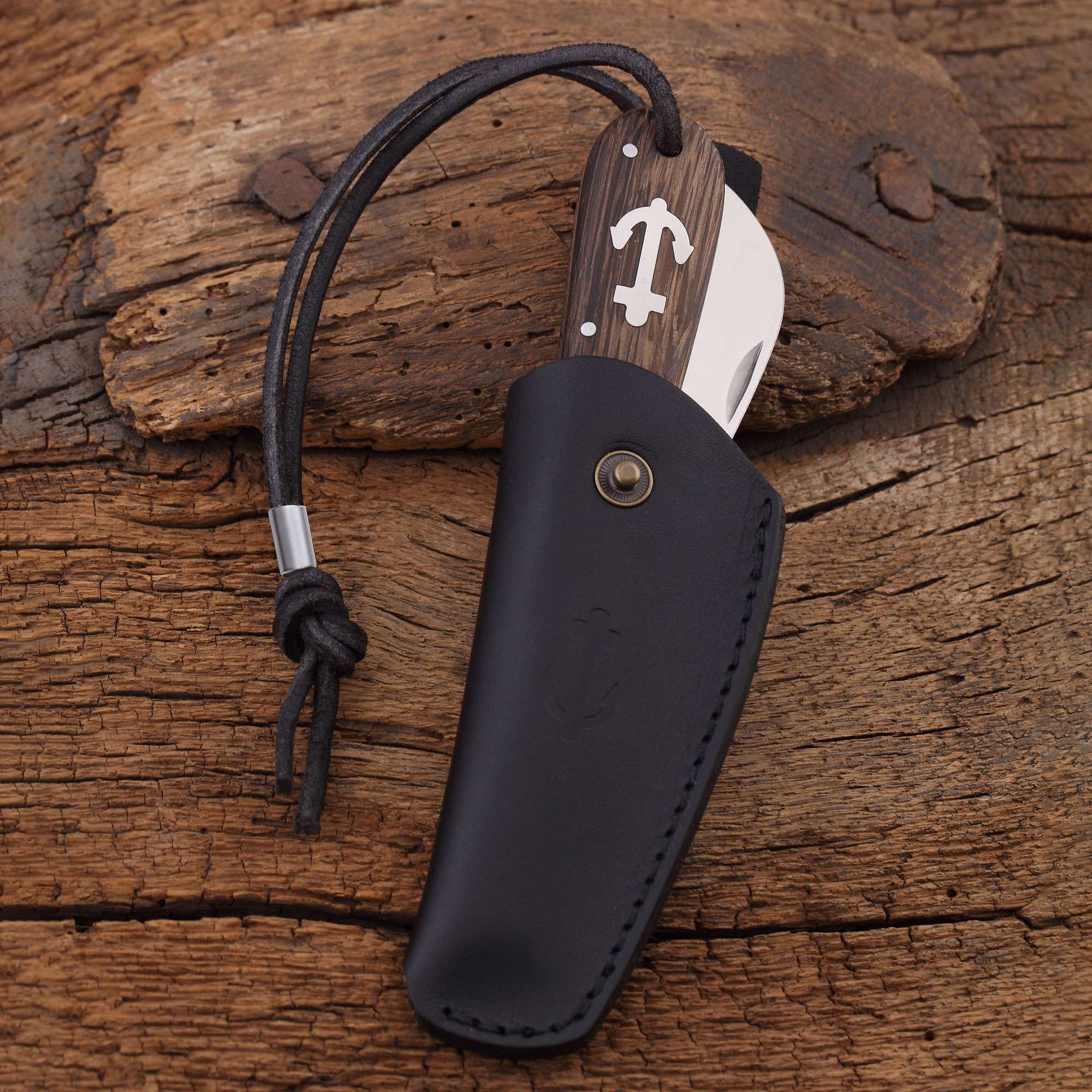
Anchor knife smoked oak large
The anchor knife from OTTER impresses with its combination of functionality and timeless elegance. A highlight is the stainless steel anchor embedded in the elegant wooden handle, which forms a stylish contrast with the dark wood scales. The ergonomic handle has a practical hole for a lanyard, simplifying transport. The hoof blade is optimized for slicing cuts. This variant is the large version of our popular anchor knife. Matching Accessories & Recommendations Perfectly matched: as a complement, we recommend our sturdy knife holster: Knife holster 02 Dark brown Black Manufacturer information: OTTER-Messer GmbH • Schwertstraße 35 • 42651 Solingen, Germany Web: www.otter-messer.de • E-Mail: info@otter-messer.de • Phone: +49 212 337829
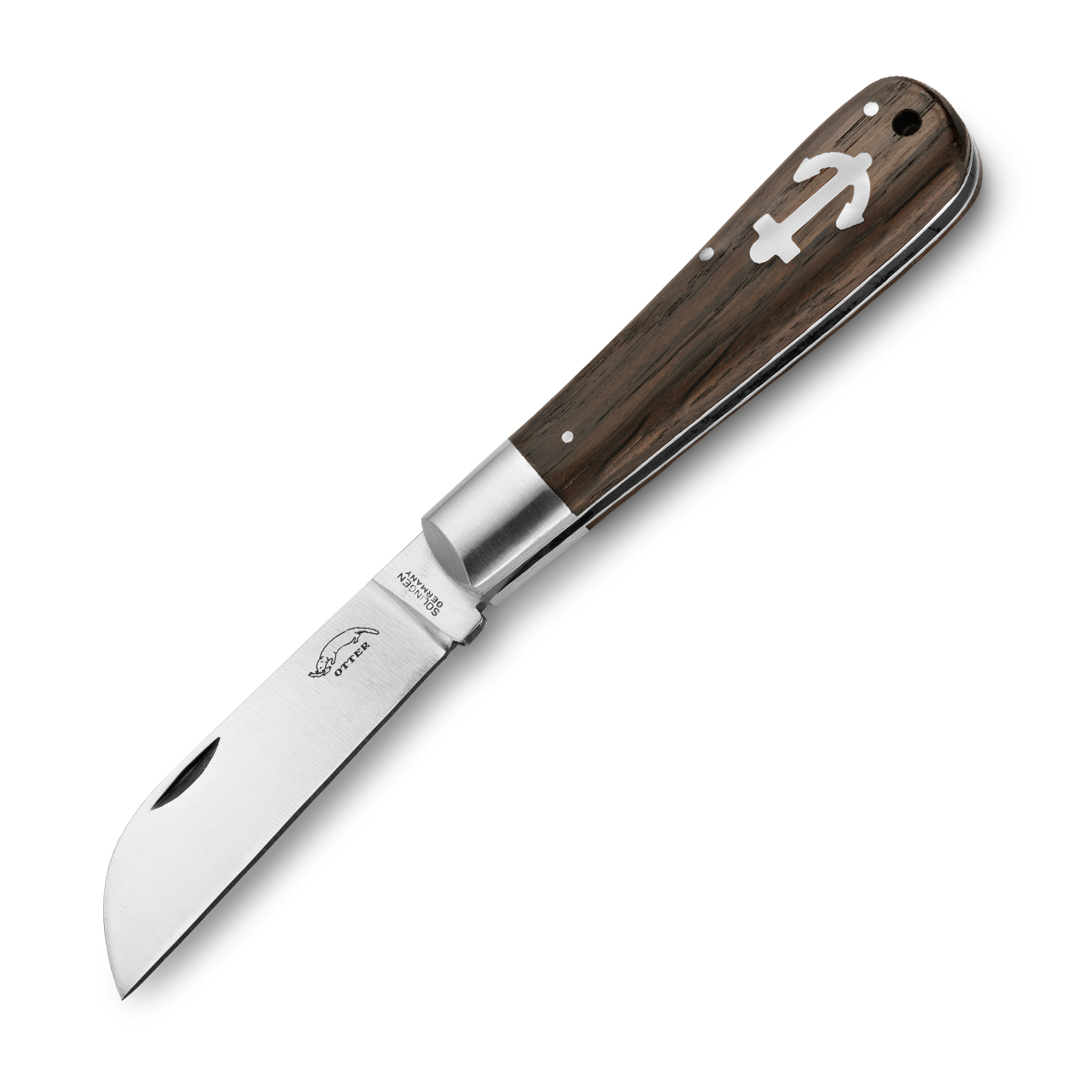
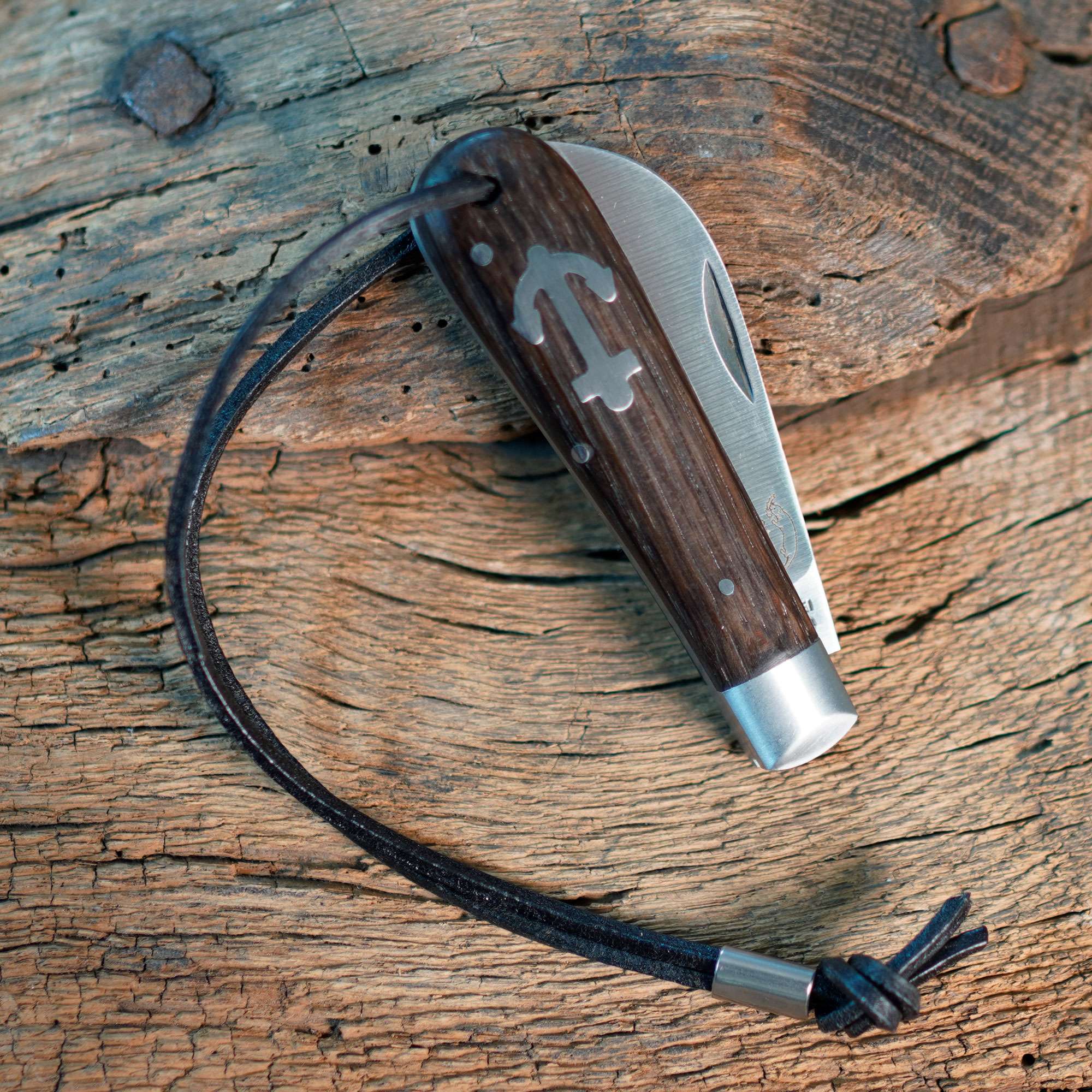
Anchor knife smoked oak small
Functionality and understated beauty – these are the attributes that define this classic from the house of OTTER. The anchor knife is a true eye-catcher. The stainless steel anchor embedded in the wooden handle gives the pocket knife a unique flair. Together with the dark handle scales made of fine wood, it creates a stylish contrast. At the end of the handle, there is a hole for threading a cord. The blade is a hoof blade, which is particularly suitable for slicing cuts. This pocket knife is the small version of the anchor knife. Matching Accessories & Recommendations Perfectly matched: as a complement, we recommend our high-quality leather cases and the sturdy knife holster: Leather case 03 Dark brown Black Knife holster 01 Dark brown Black Manufacturer information: OTTER-Messer GmbH • Schwertstraße 35 • 42651 Solingen, Germany Web: www.otter-messer.de • E-Mail: info@otter-messer.de • Phone: +49 212 337829
Product Overview
The ANKER pocket knife category presents classic mariner's knives from Solingen, handcrafted and available in various versions. Here you will find the traditional anchor knives in large and small sizes, featuring an inlaid anchor design element and a lanyard hole for a cord. These knives are designed as robust companions for everyday use, leisure, and maritime applications.
Materials & Blades
For the anchor knives, you can choose between two blade steels: traditional C75 carbon steel for maximum edge retention, and a stainless steel variant (1.4034) for easy maintenance in wet or humid conditions. The blades are predominantly designed in a Sheepsfoot shape, featuring a straight, safe edge ideal for pulling cuts. Model variants offer blade lengths of around 70–80 mm.
Handle Selection & Workmanship
The handle scales are available in fine woods and materials, including African Blackwood (Grenadilla), Burl Black Locust (Maserrobinie), Smoked Oak, Sapelli, and Walnut Burl, as well as the low-maintenance Elforyn alternative. Walnut Burl variants are left natural, guaranteeing unique pieces; Burl Black Locust is highlighted for its hardness and durability. On selected models, a brass or stainless steel anchor is embedded into the handle, emphasizing its maritime character.
Selection Criteria
Choose your anchor knife based on these criteria to find the right model for your intended use:
- Blade steel: Carbon (C75) for sharpness vs. stainless (1.4034) for low maintenance.
- Handle material: Aesthetic preferences, hardness, and uniqueness (e.g., Walnut Burl as one-of-a-kind pieces).
- Blade shape & length: Sheepsfoot blade for safe pulling cuts; lengths approx. 70–80 mm.
- Version: Large or small version depending on handling and portability.
- Finish & care: Blued carbon blades change their appearance over time with use; this is a natural process.
Applications
The anchor knives are suitable for maritime tasks, light craftwork, outdoor and leisure use, as well as attractive collector's items or gifts. Opt for a stainless blade if frequent exposure to moisture is expected (e.g., on board or during a picnic); choose carbon steel if maximum edge retention and a traditional patina are desired. The slipjoint design offers a proven, safe mechanism without a rigid lock.